

Is your network infrastructure a Frankenstein’s monster of mismatched tools and quick fixes? This is what most small business IT looks like; companies adopt solutions without a thought as to how they are supposed to work together, and it ultimately ends up impacting operations. This creates tech debt, and not the monetary kind, that is hard to bounce back from without taking a serious look at your IT practices.
In its current state, artificial intelligence takes whatever you tell it very literally. As such, it is very easy to misdirect it into digital rabbit holes… which is the last thing you want, when time is very much money to your business. This is precisely why it is so crucial that we become adept at properly prompting the AI models we use. Too many hallucinations (responses that share inaccurate or unreliable information) simply waste time and money, but the better the prompt, the less prone the AI will be to hallucinate. Let’s go over some of the best practices to keep in mind as you draft your prompts.

To many business owners, modern technology feels like a black hole; a recurring line item that keeps getting more expensive without ever making life noticeably easier. If you have ever felt like you are buying software just to keep up rather than to get ahead, you are not alone. The goal should not be to buy more IT. The goal is to capture value. Here is how to bridge the gap between technical complexity and business growth.

Working in IT, we see the behind-the-scenes of dozens of businesses. To many, a Point of Sale (POS) system is often viewed as just a digital cash register. It’s actually the central nervous system of a modern business. When it works, it is invisible; when it fails, the entire operation grinds to a halt. As we move through 2026, the complexity of these systems has reached an all-time high. Here are five of the biggest challenges we see businesses facing today from an IT perspective.
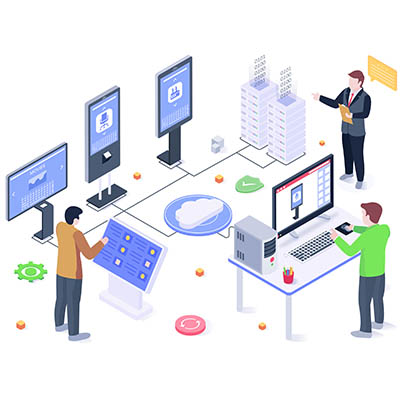
Take a quick walk through your business. When you look at the screens on the walls, what’s actually on them? If it’s a generic weather widget, a “Happy Monday!” slide that’s been up for three weeks, or a “No Signal” box, you aren’t looking at a technology investment. You’re looking at a $10,000 screensaver.