


If your business relies on software tools to handle everyday tasks, there is a date you always need to keep on your radar: the “End-of-Life” (EOL) date. A prime example is happening right now: Microsoft Publisher is reaching its official End-of-Life in October 2026. If you have team members using Publisher to whip up flyers, newsletters, or quick marketing templates, October 2026 might sound like a long way off. However, in the IT world, letting an EOL date sneak up on you is one of the easiest ways to cause unexpected downtime, lose critical files, and scramble for expensive last-minute fixes.

Software as a Service (SaaS) is a double-edged sword. When managed well, it’s a high-performance engine for growth; when ignored, it becomes a silent bleeder, slowly draining your budget through automated monthly charges that no one is tracking. The question isn’t whether you need SaaS—you do. The question is whether your SaaS is working for you, or if you’re just working to pay for it.
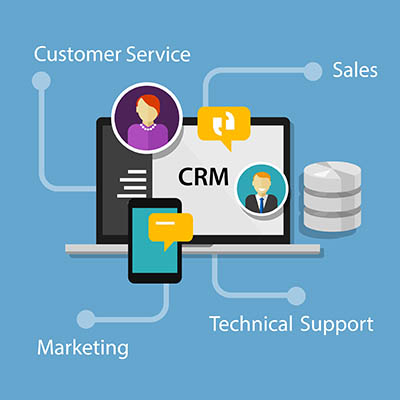
Is your business still relying on a patchwork system of spreadsheets, sticky notes, and emails to manage all of its customer relationships? This type of manual work is not cheaper or more efficient; it only accumulates organizational debt that will eventually come due. Poor customer relationship management results in hundreds of hours of lost productivity throughout the year, directly translating into lost sales and profits for your business.

Business is already complicated enough without having to remember all of your passwords. Unfortunately, logins and sign-ons are a necessary part of operations, and without them, work isn’t going to get anywhere. All that said, there is a solution to the problem of having too many accounts with too many unique credentials, and it all starts by asking a simple question.

With cloud computing, your business has access to tools that fundamentally change the way work takes place. Several of the biggest reasons to adopt the cloud include flexibility, efficiency, and scalability. How are you planning to use the cloud to add or remove resources to your business initiatives as needed? Today, we want to share how scalability works and how your business can fully leverage it with the cloud.