

How the Cloud Helps Your Business Scale Effortlessly
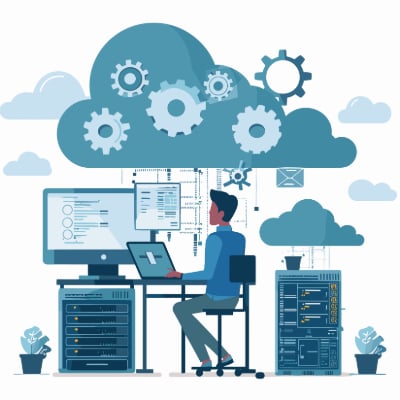
With cloud computing, your business has access to tools that fundamentally change the way work takes place. Several of the biggest reasons to adopt the cloud include flexibility, efficiency, and scalability. How are you planning to use the cloud to add or remove resources to your business initiatives as needed? Today, we want to share how scalability works and how your business can fully leverage it with the cloud.
Understanding Scalability
In cloud computing, scalability means that your business can adjust its systems to accommodate its ever-changing needs. This might mean making changes to your cloud resources rather than purchasing and maintaining additional physical servers. This is great for businesses that don’t have consistent workloads, like e-commerce websites with seasonal traffic spikes and startups that could take off (and slow down) at any moment.
There are two types of scalability you can expect from the cloud:
Vertical Scalability
With vertical scalability, you take a single resource and expand it. Think of it like adding more RAM or a faster CPU to a virtual machine. You’re making a single computer more powerful, in a sense. It’s great for applications that can’t be broken into smaller pieces.
Horizontal Scalability
With horizontal scalability, you’re adding more resources to an entire system of virtual machines or servers to a server farm. In this way, you’re allowing more computers to share the workload. It’s usually the preferred way for modern cloud solutions because it’s vastly easier to implement and offers more resilience.
When you can scale resources on demand, you get to reap the following benefits:
- Cost efficiency: Paying as you go allows you to pay for the resources as they’re needed while avoiding the up-front costs associated with on-site hardware.
- Flexibility and agility: With cloud scalability, it’s easy to try new products, services, or campaigns without worrying about hardware limitations. This allows you to accelerate time-to-market so you can stay competitive.
- Improved performance and reliability: If you can adjust your resources as needed, you’ll be able to remain responsive to your business’ needs. Horizontal scaling lets you adjust the workload so if one server fails, you have others that can pick up the slack.
Scalability isn’t just built into cloud computing; it’s an inherent benefit of its design. Your business can leverage this scalability to great gain. Learn more by calling us today at (603) 889-0800.