

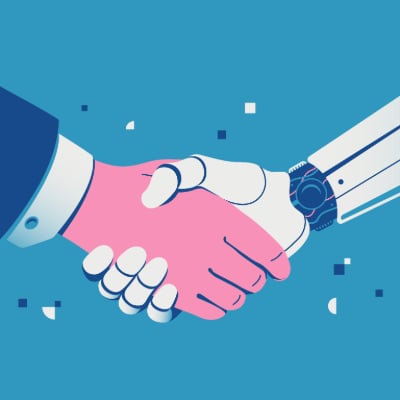
Pop culture has given us a vivid, if often terrifying, impression of artificial intelligence. When we hear AI, many still picture calculated malice: a HAL 9000, a Skynet, or an Ultron. The real potential of AI is far more productive, it’s less about calculating world domination and more about becoming your organization’s most helpful collaborator. Think of it as a JARVIS for your executive team or an R2-D2 for your operational staff: a powerful tool that assists your team in generating ideas, solving complex problems, and completing high-volume tasks. Critically, maximizing this potential doesn’t require new hardware; it requires sharpening the very soft skills we already value in our top performers: curiosity, empathy, and resilience.

Business is already complicated enough without having to remember all of your passwords. Unfortunately, logins and sign-ons are a necessary part of operations, and without them, work isn’t going to get anywhere. All that said, there is a solution to the problem of having too many accounts with too many unique credentials, and it all starts by asking a simple question.

Your business’ relationship with IT has a direct correlation to how well it operates. If your technology fails, your business suffers productivity losses, as well as financial ones due to decreased reliability in the eyes of customers and clients. One of the best ways to ensure you’re following through on the promises you make to your customers is to implement a proactive IT strategy to replace the reactive approaches seen in the past.

Does your organization have the good fortune of having an in-house IT department? More likely than not, even if you do, your department has maybe a couple of technicians at most, and they are all up to their ears in work, whether it’s keeping up with maintenance or struggling to implement new and innovative solutions. If you’re looking for ways to upgrade your organizational IT infrastructure, we recommend you start with a network audit to determine what needs to be done (and how we can help you do it).

AI has revolutionized the way businesses operate, streamlining various tasks and changing how knowledge-based businesses function in record time. One of the ways that businesses are using AI is customer support, but how effective is it really? Is there any merit to maintaining the human element of your customer service, or said in a different way, what can human customer support offer that AI cannot?